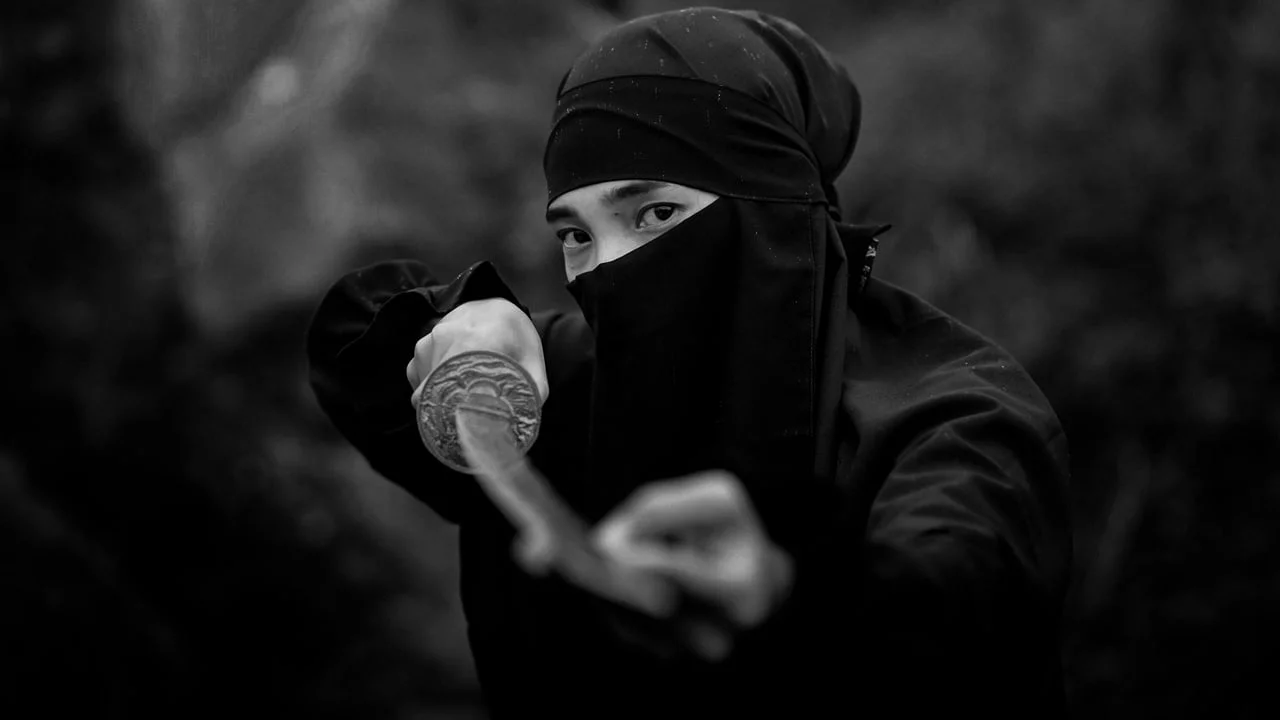
Sekiro: Shadows Die Twice — The Action Game That Makes You Learn One Thing and Then Demands You Do It Perfectly
Today's pick: Sekiro: Shadows Die Twice (FromSoftware, 2019). Metacritic 90 (PS4) / 91 (Xbox One) / 88 (PC), Game of the Year at The Game Awards 2019, Steam Very Positive (93% of 86,000+ reviews). This guide covers how the Posture system and Perilous Attacks work, what players love and where the game genuinely frustrates them (zero build variety, steep uncompromising difficulty, no co-op), and a spoiler-free setup for Wolf the shinobi and the Dragon's Heritage lord he's sworn to protect.

| Developer | FromSoftware |
| Released | March 22, 2019 |
| Platforms | PS4, Xbox One, PC |
| Metacritic | 90 (PS4) / 91 (Xbox One) / 88 (PC) |
| Steam | Very Positive — 93% of 86,065 reviews |
| Awards | Game of the Year + Best Action/Adventure, The Game Awards 2019 |
| Playtime | ~25–35 hrs (first playthrough) |
Sekiro is the only game in FromSoftware's catalog that strips out everything optional and says: you will fight this way, on these terms, until you get it right. No builds to tune, no co-op to call in, no stamina bar to manage. Just you, a katana, a prosthetic arm, and a posture gauge that rewards aggression and punishes hesitation. Critics gave it a 90 on Metacritic with Universal Acclaim; it won Game of the Year at The Game Awards 2019.1 Whether that narrow focus is exhilarating or infuriating depends on your tolerance for the learning curve.
How it plays
The core loop is built around two gauges: your health bar and your Posture gauge. Health works like any action game — reach zero and you die. Posture is different. It's a yellow meter that fills when you take hits or block sloppily; fill it and you're left wide open. The same applies to every enemy. Fill their Posture gauge — primarily by deflecting their attacks at the right moment — and you get to execute them with a Shinobi Deathblow regardless of remaining health.2 The two gauges are linked: enemies with lower health see their Posture recover more slowly, so chipping away at health makes Posture executions easier.
The thing that separates Sekiro from every other FromSoftware game is that deflecting is almost always the correct answer. In Dark Souls or Elden Ring, dodging is primary. Here, timing a block on the exact frame before an attack lands doesn't just negate damage — it fills the enemy's Posture. Turtling (holding block without timing) drains your own Posture. The game wants you to stay in the enemy's face, match their rhythm, and convert their aggression into their own destruction.
On top of this, enemies have Perilous Attacks — unblockable moves flagged with a red kanji warning. Each type requires a different response: thrust attacks need a perfectly-timed counter called Mikiri (or a parry), sweeping attacks require a jump (with a follow-up kick that adds Posture damage), and grabbing attacks need a sidestep.2 The prosthetic arm adds a toolkit of gadgets — shuriken, flamethrower, axe — that exploit specific enemy weaknesses, and Wolf also has stealth options for taking out enemies before a fight starts.
One note: there are no dodge invincibility frames. The roll that lets you ghost through attacks in other Souls games doesn't exist here. You either deflect or you take the hit.

What players are saying
The consensus from Metacritic's 77 critic reviews is strong: RPGamer calls it "one of FromSoftware's best and most distinctive titles"; Meristation described it as a game where "for every cry of frustration there is a revealing discovery."5 Darkstation put it plainly: "FromSoftware's purest distillation of a game design philosophy that values skill-based combat and isn't afraid to challenge the player at nearly every moment."
Steam's 93% Very Positive rating from over 86,000 reviews tells the same story, though players are more candid about where it breaks down.6
What they praise:
- The combat system, consistently called the best thing about the game — the feeling when deflects start clicking is widely described as euphoric
- Atmosphere: the Sengoku Japan setting is fully committed, with enemy design and environments that reward exploration
- Length and focus: at ~25–35 hours it's lean for a FromSoftware title, and the pacing reflects that
What they criticize — and these are real complaints:
- Zero build variety. Unlike any other FromSoftware game, you have one weapon and one playstyle. Players who want to experiment with heavy weapons, ranged builds, or different character archetypes get none of that. One Metacritic reviewer gave it a 4: "It's just one dimensional Katana bashing all the time and nothing else."
- Steep, uncompromising difficulty with no options. There is no easy mode, no summons, no way to reduce difficulty. Players who hit a wall on a boss describe it as demoralizing rather than motivating — unlike Hollow Knight or Elden Ring where the open world lets you walk away and level up, Sekiro often requires simply continuing to fail until the pattern clicks.
- Camera problems in tight spaces. This is a recurring complaint across Metacritic user reviews. Boss arenas are sometimes small, and the camera loses tracking when you're close to walls.
- Dragonrot mechanic. Every time you die (fully, not the partial-death resurrection the game offers), a mechanic called Dragonrot progresses for certain NPCs. This adds an extra consequence to failure that some players found punishing and others found meaningless once they understood the cure.
- NG+ replayability. New Game Plus doesn't change much structurally — you face stronger enemies with the same patterns, which some veterans find thin compared to Bloodborne's Chalice Dungeons or Elden Ring's DLC.
The game also has no co-op or multiplayer of any kind. If you're stuck on a boss, there's no calling in help.
The story setup (no spoilers past the opening)
The game is set during Japan's Sengoku period, a decades-long era of civil war in the late 1500s. You play as Wolf — nicknamed Sekiro — a shinobi who has spent years in service to a young lord named Kuro.7 Kuro is not an ordinary lord: he carries what the game calls a "Dragon's Heritage," a bloodline connected to immortality.
At the start of the game, Wolf fails to protect Kuro. He's captured by the Ashina clan — a powerful samurai faction whose forces have taken over the region — and loses his arm in the process. He wakes up with a prosthetic arm and a mission: find Kuro, who's been taken by the Ashina clan's leader, and get revenge on the enemy who crippled him.
The story is told mostly through brief NPC conversations and item descriptions in FromSoftware's usual style — it doesn't hold your hand. The setting and lore run deeper than the opening suggests, but the premise is concrete: a shinobi, his lost lord, a prosthetic arm, and a blood debt.
Should you play it?
Yes, if: You want a tight, focused action game where learning the combat is the whole point; you're fine with one weapon and one playstyle; you liked any FromSoftware game before and want something mechanically distinct.
No, if: You need build variety or the ability to tune difficulty; you found Souls games too punishing and were hoping this would be easier (it isn't — and there's no open world to level up in if you're stuck); you want co-op or multiplayer.
The shortest summary: Sekiro is FromSoftware with the safety nets removed. The combat either becomes the most satisfying thing you've played in years or a wall you'll never get past. Most players end up on the right side of that line — but fewer than with Elden Ring or Hollow Knight.
围绕这条内容继续补充观点或上下文。