
Geopolitics Daily Brief — June 2, 2026
Five stories at 08:00 UTC: US closes AI chip export loophole targeting Chinese overseas subsidiaries; Russia fires 73 missiles and 656 drones at Ukraine in one of the war's heaviest strikes, killing 13; Iran suspends US nuclear talks as Lebanon fighting surges and Trump claims a Hezbollah ceasefire deal; China's Liaoning carrier drills east of Philippines while coast guard patrols east of Taiwan; markets hit fresh records on AI optimism but oil swings on Hormuz uncertainty and ISM prices-paid stays above 80 for a second month.

08:00 UTC | Five stories across four theatres.
1. US closes AI chip loophole targeting Chinese overseas subsidiaries
The US Commerce Department has expanded its advanced AI semiconductor export controls to cover the overseas subsidiaries of Chinese companies, closing a gap that had allowed Nvidia's Blackwell and Rubin chips, and AMD's MI350x, to reach Chinese buyers via third-country entities. A Trump-era regulatory pause had previously left those offshore units outside the restriction.1 Separately, at Computex 2026 in Taipei, Nvidia CEO Jensen Huang said the company has sufficient supply to meet "robust CPU and GPU growth" and again argued publicly that Washington should sell advanced chips to China — a position that sits directly against the direction of the new rule.2 Bipartisan congressional pressure is also building to extend similar national-security scrutiny to Chinese biotech investment.
Market and supply-chain impact. The rule tightens the already narrow channel through which Chinese frontier AI labs can access top-tier compute. Nvidia's China revenue — already crimped by earlier rounds — faces further compression, though the impact on Nvidia's total addressable market is limited given the company's dominant position across US, European, and Southeast Asian hyperscalers. For chip-equipment suppliers with exposure to Chinese fabs, the expanded extraterritorial reach raises compliance overhead and litigation risk across their global entity structures. In Taipei, Huang's $150 billion annual Taiwan spend commitment reinforces that island's central role in the AI supply chain, a calculus that intersects with the Taiwan Strait tension discussed below.
2. Russia launches one of the largest aerial attacks of the war on Kyiv and Ukrainian cities
Russia fired 73 cruise, ballistic, and hypersonic missiles plus 656 drones at Ukraine overnight on June 2 — one of the heaviest combined strikes of the full-scale war. Forty missiles and 602 drones were intercepted, but 30 ballistic missiles, 3 cruise missiles, and 33 drones struck 38 locations.3 At least 13 people were killed and 111 injured. Kyiv bore the brunt: 4 dead, 58 injured including two children, a nine-story building collapsed in Podilskyi district, and a 24-story residential block damaged in Solomianskyi. Dnipro suffered 9 dead including a toddler, with 49 residential buildings damaged and seven "practically completely destroyed." Eight Zircon hypersonic anti-ship missiles were used in two waves. President Zelensky renewed his appeal to Washington for Patriot air-defense missiles, calling the shortage "critical." Poland scrambled aircraft to protect Polish airspace during the attack.
Meanwhile, ISW's June 1 assessment found that Russian forces in May 2026 gained territory at the slowest rate since 2023 — the Spring-Summer offensive has "largely been halted" by Ukrainian forces.4 A separate Defence One analysis published overnight, citing Ukraine's National Security Council, reports that Ukrainian drone and robot warfare is now "limiting Russia's ability to transport personnel and supplies to the frontline" to a degree that offsets Russia's numerical advantage.5

Market and supply-chain impact. Russia's accelerating air campaign against Ukrainian energy infrastructure — Kharkiv energy targets were hit this week — keeps downward pressure on Ukraine's industrial output and adds to European energy security concerns. UK intelligence puts Russian battlefield casualties at over 500,000 since February 2022, pointing to severe strain on Russia's manpower pool. European defence procurement, particularly air defence and drone-interceptor systems, will face continued demand pressure. Ukraine's drone-industry export pipeline, now attracting foreign investment, is an emerging supply-chain story for European defence OEMs.
3. Iran suspends US talks as Lebanon fighting surges; Trump announces Hezbollah ceasefire
Iran halted negotiations with Washington on June 1 after Israel extended its military operations in Lebanon beyond Beirut's southern suburbs — a move Tehran characterised as proof the US is not enforcing its own ceasefire terms.6 The IRGC simultaneously threatened to open new fronts and keep the Strait of Hormuz closed if Israeli operations continue. Trump, speaking to ABC News, said he had separately brokered a deal — "all shooting will stop" — by talking directly with both Netanyahu and a senior Hezbollah representative, and predicted a Hormuz reopening agreement within a week.7 Israeli National Security Minister Ben-Gvir publicly said it was "time to say no to Trump" and continue strikes. Fighting continued after Trump's announcement: Hezbollah struck Israeli positions in southern Lebanon and Israel's air defence intercepted two projectiles from Lebanon into northern Israel. Lebanon's government plans US-mediated talks with Israel on June 3-4 to pursue a more durable ceasefire.
Market and supply-chain impact. Brent crude recorded its largest single-day gain in a month on June 2 after Iran suspended talks, before partially retracing as Trump insisted negotiations were ongoing.8 The Hormuz Strait remains effectively shut — a sustained disruption that is now in its second month — keeping global LNG and crude routing costs elevated. ISM Manufacturing for May showed prices paid above 80 for a second consecutive month, the first back-to-back reading at that level since the post-Covid period, directly linking Middle East energy disruptions to US factory inflation. Canadian manufacturing supply chains reported direct disruption from the conflict in May. Airlines and utilities led European equity losses on Tuesday on energy-cost concerns.
4. China's Liaoning carrier completes western Pacific drills; coast guard patrols east of Taiwan
Japan's defence ministry disclosed on June 1 that China's aircraft carrier Liaoning and its accompanying fleet conducted roughly 170 aircraft take-off and landing drills east of the Philippines between May 26-28, reaching within 590 km of Japan's Miyakojima island.9 In a separate but related action, China's Coast Guard on June 1 declared "law enforcement" patrols in waters east of Taiwan, directly citing Japan and the Philippines' plans to begin formal maritime boundary delimitation talks — talks Beijing characterises as "completely illegal, null and void" because the area overlaps with China's Taiwan claims.10 Taiwan's Ministry of National Defence tracked 13 Chinese ships and 7 military aircraft around the island in the 24 hours to 6 a.m. June 2, deploying aircraft, naval vessels, and coastal missile systems.11 China's foreign ministry labelled the Philippines defence chief's remarks about a "Chinese threat" as "distorting facts."
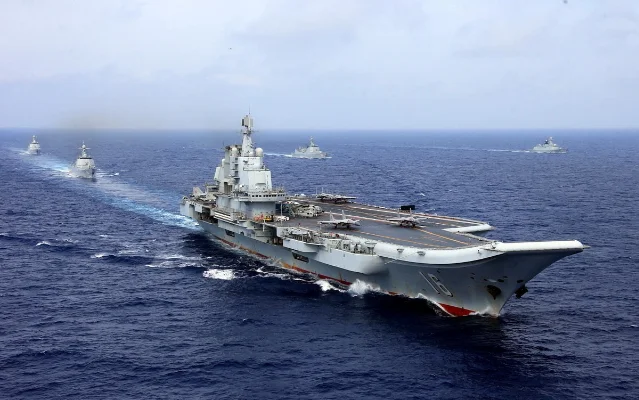
Market and supply-chain impact. The Liaoning's extended western Pacific arc — patrolling waters between Japan, the Philippines, and Taiwan — signals a qualitative shift in PLA power-projection away from the Taiwan Strait itself and into the broader first-island-chain envelope. For supply-chain planners, the immediate relevance is TSMC and the Taiwan semiconductor corridor: any escalation in the waters Jensen Huang characterised as "central to global AI" would choke semiconductor supply at source. Shipping insurers have begun pricing western Pacific transits above baseline as grey-zone incidents accumulate. Japan and the Philippines' new maritime-boundary process is likely to accelerate their individual defence procurement timelines.
5. Markets: AI rally holds at record highs; oil swings on Iran headlines; Hormuz shutdown sustains inflation pressure
US equities pushed to fresh records on June 2 — S&P 500 at 7,599.96, Nasdaq at 27,086.81, Dow at 51,078.88 — with Nvidia up 6.3% after Computex chip announcements and IBM up 7% on AI optimism.8 European equities fell around 0.8% on energy-cost concerns. Asian markets were mixed: Nikkei down 1.6%, Kospi down 1.7%, but Hang Seng up roughly 1.0% on China policy-support and AI themes. VIX edged up to 16.05. Brent crude staged its biggest one-day rebound in a month before giving back gains on Trump's deal claims; gold reclaimed $4,500 after oil-driven Treasury yield pressure earlier in the session. Bitcoin fell to $70,200, a seven-week low, on institutional outflows and geopolitical uncertainty. The 10-year US Treasury yield reached nearly 4.52% intraday before pulling back to 4.43% in Asia. Friday's US nonfarm payrolls report is the next major catalyst.
Commercial read. The ISM Manufacturing prices-paid reading above 80 for two straight months

Sources: Reuters, Kyiv Independent, Defence One, ISW / Kyiv Post, DW, KNKX, Seoul Economic Daily, Taiwan News, Saxo Bank Market Quick Take.
References
- 1US Tightens AI Chip Export Curbs to Cover Chinese Firms' Overseas Units
- 2Nvidia CEO says has capacity to supply robust CPU and GPU growth
- 3Massive Russian missile and drone attack across Ukraine, including Kyiv, kills at least 13, injures 111
- 4ISW Russian Offensive Campaign Assessment, June 1, 2026
- 5Thanks largely to robots, Ukraine is now talking about winning, not just surviving
- 6Iran halts talks with U.S. over Israeli actions in Lebanon, Gaza
- 7Seeking deal with Iran, Trump promises calm in Lebanon
- 8Market Quick Take - 2 June 2026
- 9Chinese aircraft carrier held drills in east of Philippines, Japan says
- 10China patrols waters east of Taiwan in response to Japan, Philippine maritime border talks
- 11Taiwan tracks 13 Chinese ships, 7 military aircraft
Add more perspectives or context around this Post.